
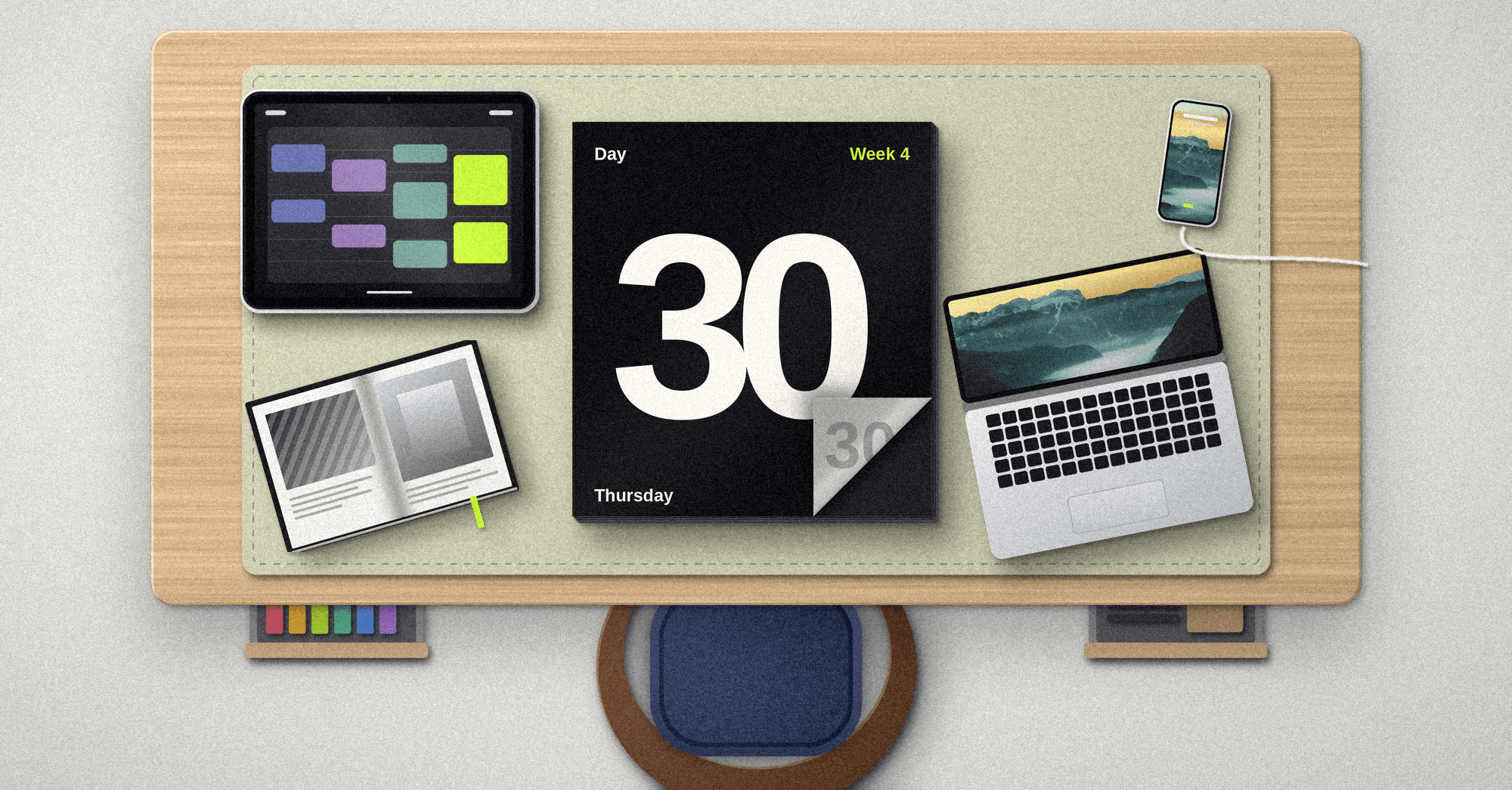
Workflow automation consulting for a small business, your first 30 days week by week
In workflow automation consulting for a small business, the first 30 days of an AI project usually move through four steps: understand how the work happens today, design the change, build it, and help your team adopt it. Each step produces something you can see, so you know where the project stands every week.
The unknown is often what makes people hesitate. If you have been through a project that went quiet for a month and came back with something you could not use, a clear week by week picture is the best protection, because it shows you what to expect and what to ask for along the way.
| Week | Step | What happens | What you have at the end |
|---|---|---|---|
| One | Understand | We learn how the work happens today, who does it, and where the time goes. | A plain description of the problem and an agreed measure of success. |
| Two | Design | We choose the approach, decide what the tool will and will not do, and mark where a person reviews. | A short plan you can approve. |
| Three | Build | We build a first working version and test it on your real examples. | A version you can try and react to. |
| Four | Adopt | Your team starts using it, we adjust what does not fit, and we show how to check it. | A working result, a trained team, and a way to see whether it is paying off. |
Week one: understand your workflow before automating it
The first week is mostly questions, because the problem you describe at the start is often not the whole problem. We talk with the people who do the work, look at real examples, and write down the steps as they actually happen, not as the process document says. By the end, you should be able to read a one page description of the problem and say yes, that is it, along with how we will know it worked.
Week two: design the workflow automation
With the problem clear, we decide the approach, including whether a ready-made tool is enough or whether something custom makes sense, which post 2 explains. We also decide what the tool will not do and where a person reviews the result, since those limits protect you as much as the features do. You approve the plan before anything is built.
Week three: build
We build a first working version and run it on your real examples, not on sample data made up for the test. You see it early, you tell us what is wrong, and we correct it, which is faster and cheaper than discovering the gap after launch.
Week four: adopt
The tool only helps if people use it, so this week is about getting your team comfortable with it, adjusting the parts that do not fit how they work, and setting up a simple way to check the result. That check is the subject of how to tell whether an AI change is working.
What a small business needs to bring to workflow automation consulting
The project moves fastest when you give us one person who knows the work well, a handful of real examples, access to the systems involved, and one decision maker who can say yes or no quickly. Slow access and unclear ownership are the most common reasons a schedule slips, so it is worth settling both before week one begins.
Frequently asked questions
What happens in the first 30 days of an AI project? You move through understanding the work, designing the change, building a first version, and helping your team adopt it, with something concrete to review at the end of each step.
What do I need to prepare before a project starts? Name one person who knows the work, collect real examples, arrange access to the systems involved, and decide who approves the plan.
What happens after the first 30 days? You review the result against the measure you agreed in week one, and then decide whether to extend it, adjust it, or move to the next project.
What if the first version does not work? You find out in week three, while there is still time to change the design, which is exactly why we test on real examples early.
Want to know more?
Every engagement starts with a conversation about the problem.
discovery@corymb.ai.
What would you do with the time you're losing to broken processes?
Once a month we share what we are learning from real client work, what is new on the blog, and practical thinking on data, AI, and process for small and mid-size businesses. Subscribe to the newsletter so you do not miss it.

Bespoke AI productivity partners.
©2026 Corymb, LLC · Founded 2026 · Lafayette, Colorado.
There is something
we want to show you.
We put together a short guide on the real reasons most teams still haven't adopted AI, and what actually helps them get past it.
No spam, and you can unsubscribe any time.